
AI is scaling. Agent management has not kept pace.
In a few years, LLMs have grown from chatbots into agentic coworkers. Agents conduct research, design systems, write code, and execute workflows. We spend more on AI and rely on it for increasingly critical work. We run more agents than we can watch.
Yet how we manage this work has not kept pace. Progress unfolds across terminals, sessions, and tools faster than we can interpret it. We infer quality from convincing outputs while our blind spots grow. When agents run into walls, we often cannot tell whether the problem is the prompt, the model, the task, or the harness. We learned this lesson in software engineering once before: you cannot improve what you cannot measure.

Every session is a feedback loop to learn from.
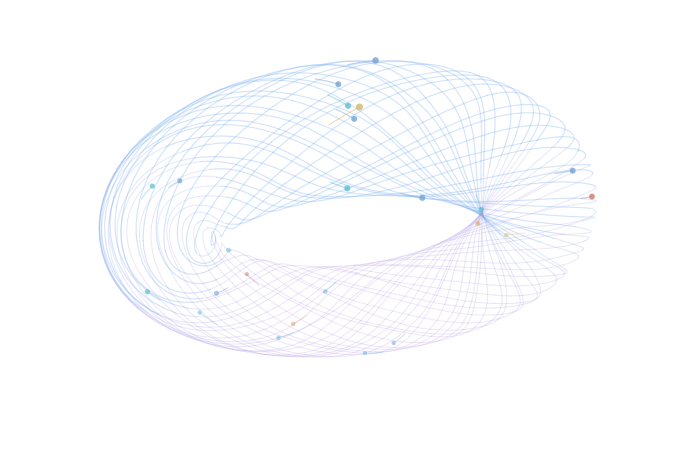
Every new agent begins within a system of instructions, tools, constraints, and past decisions. Each research or coding session records approaches that succeed and fail. Across thousands of sessions, this data can show us how to improve the system. Yet teams lack the capacity, tooling, and resources to structure and analyze it.
Every run should be a feedback loop for our prompts, projects, and harnesses. We need systems that watch these sessions, learn what effective and efficient work looks like, and improve the conditions of the next session. Those changes need to be tested against later results so we know whether they helped. Otherwise, lessons disappear and humans keep compensating with more instructions.
Supervising agents keeps draining more time and resources.
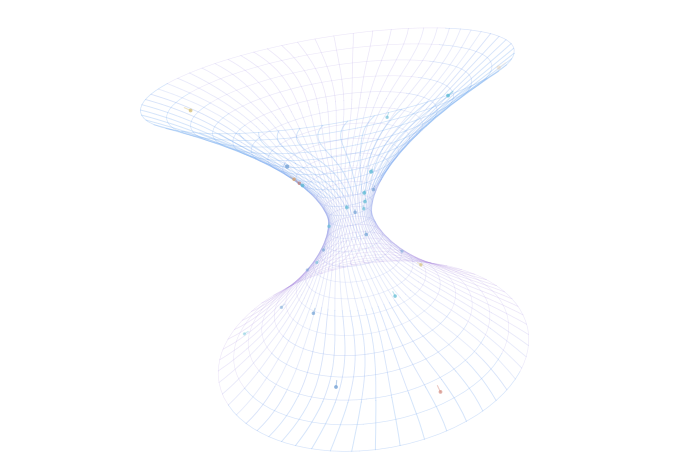
If we want people to tackle bigger challenges with agents, we need to free them from constant manual supervision. Managing agents at scale takes time, fragments attention, and creates fatigue. The systems we use to analyze agents and improve their context should also help manage their work. Otherwise, we get lost in the swarm.
That means bringing people in when their judgment is needed, automating recurring tasks, and addressing repeated failures. People should be able to direct more agents without having to follow every step, while keeping enough visibility to intervene when it matters.